
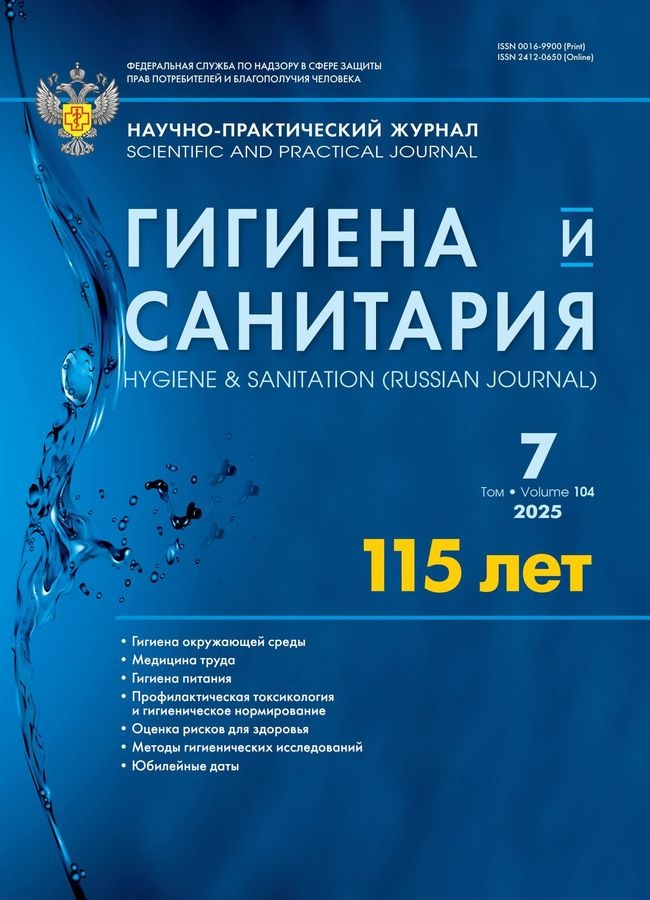
Hygiene and Sanitation

Scientific and practical journal

Editor-in-chief 

  • Valery Nikolaevich Rakitsky
    Academician of the Russian Academy of Sciences, Honored Scientist of the Russian Federation, Doctor of Medical Sciences, Professor
    Federal Scientific Center of Hygiene named after F.F. Erisman of Rospotrebnadzor, Institute of Hygiene, Pesticide Toxicology and Chemical Safety (Mytishchi) ORCID iD: 0000-0002-9959-6507

Publisher

  • Federal Scientific Center of Hygiene named after F.F. Erisman of Rospotrebnadzor (Mytishchi)

Founders

  • Federal Service for Surveillance on Consumer Rights Protection and Human Wellbeing
    About the journal

Indexation

  • Russian Science Citation Index (RSCI)
  • Google Scholar
  • Crossref
  • Ulrich's Periodicals Diretory
  • Scopus

Journal's homepage

https://www.rjhas.ru/jour 


About journal

Year of foundation: 1910

A leading general-purpose hygienic journal. Publishes articles on all sections of hygienic science and sanitary practice. The main attention is paid to the issues of environmental and populated areas hygiene, human ecology, hygiene of children and adolescents and radiation hygiene, occupational hygiene, food hygiene and social hygiene, health risk assessment. Original articles and literature reviews are accepted.

Target audience: sanitary doctors and hygienists, organizers of sanitary affairs, employees of hygiene and epidemiology centers, Rospotrebnadzor departments, employees of research hygiene institutes and the faculty of hygiene departments of medical institutes.

The journal "Hygiene and Sanitation" is included in the List of peer-reviewed scientific publications in which the main scientific results of dissertations for the degree of candidate of sciences, for the degree of doctor of sciences of the Higher Attestation Commission (HAC) of the Ministry of Science and Higher Education of the Russian Federation in the following specialties must be published:

  • 3.2.1. Hygiene (medical)
  • 3.2.1. Hygiene (biological)
  • 3.2.4. Occupational Medicine (medical)
  • 3.2.4. Occupational Medicine (biological)
  • 3.3.4. Toxicology (medical)
  • 3.3.4. Toxicology (biological)
  • 1.5.11. Microbiology (medical sciences)
  • 1.5.15. Ecology

The journal "Hygiene and Sanitation" is also included in the list of domestic publications that are included in international abstract databases and citation systems.

Main sections of the journal

  • Environmental hygiene
  • Occupational medicine
  • Children's and adolescents' hygiene
  • Food hygiene
  • Health risk assessment
  • Preventive toxicology and hygienic regulation
  • Social and hygienic monitoring
  • Hygienic research methods


Frequency

  • 12 times a year

Current Issue

Open Access Open Access  Restricted Access Access granted  Restricted Access Subscription or Fee Access

Vol 105, No 1 (2026)

Cover Page

Full Issue

Open Access Open Access
Restricted Access Access granted
Restricted Access Subscription or Fee Access

ENVIRONMENTAL HYGIENE

Achievements and promising directions of scientific research in the field of hygienic regulation of water quality in centralized water supply systems of populated areas
Rakhmanin Y.A., Sinitsyna O.O., Egorova N.A., Turbinsky V.V., Alekseeva A.V., Kuz N.V., Ryzhova I.N., Kochetkova M.G.
Abstract

Introduction. Growing progress in scientific research into the impact of water pollution on public water supplies has necessitated continuous improvement in the methodology for developing standard values for new influencing factors and water use conditions, an assessment of which is the subject of this publication.

Materials and Methods. The study’s materials included publications and the results of own research on the hygienic regulation of chemicals in water bodies used for domestic and drinking water, the hygienic aspects of seawater desalination and the preparation of drinking water, as well as regulatory and methodological documents in the field of water hygiene.

Results. The article presents such main scientific achievements in the field of drinking water hygiene as development of coefficients of species-specific differences in laboratory animal health parameters during extrapolation of experimental data to humans, modern histomorphological, biochemical, and genetic methods and various functional loads on experimental animal bodies during toxicological studies, additional criteria for assessing drinking water quality, a six-stage scheme for standardizing essential elements, new biophysical indicators of drinking water quality, hygienic requirements for local systems of additional purification and disinfection of drinking water. Innovative proposals for the scientific substantiation of hygienic requirements for water with a limited purpose of use – domestic and domestic – are outlined, as well as an algorithm for taking into account the proportional contribution of uncertainty factors of its chemical composition in the hygienic assessment of the chemical safety of drinking water quality.

Limitations. The study is limited to the characteristics of water used for domestic and drinking water and domestic water use.

Conclusion. An analysis of the achievements of scientific research on the hygienic standardization of drinking water quality demonstrated its high effectiveness and determined the feasibility of further promising research in this area outlined in the article.

Compliance with ethical standards. This study does not require the approval of a biomedical ethics committee.

Contribution:
Rakhmanin Yu.A. – study concept and design, writing, editing;
Sinitsyna O.O. – material collection and data processing, writing, editing;
Egorova N.A. – material collection and data processing, illustrations;
Turbinsky V.V. – material preparation and data processing;
Alekseeva A.V., Ryzhova I.N. – material collection and data processing;
Kuz N.V. – material collection and illustration;
Kochetkova M.G. – illustration.
All authors are responsible for the integrity of all parts of the manuscript and approval of the manuscript final version.

Conflict of interest. The authors declare no conflict of interest.

Funding. The study had no sponsorship.

Received: December 10, 2025 / Revised: December 16, 2025 / Accepted: December 2, 2025 / Published: February 10, 2026

Hygiene and Sanitation. 2026;105(1):6-14
pages 6-14 views
Cyanobacteria and cyanotoxins in water sources – a threat to public water safety
Sinitsyna O.O., Kuz N.V., Pushkareva M.V., Turbinsky V.V., Shiryaeva M.A.
Abstract

Introduction. Massive algal blooms typical of all climatic zones of the Russian Federation are observed in all federal districts. The greatest danger is posed by the rapid proliferation of cyanobacteria (CB), whose life cycle and death release highly hazardous cyanotoxins into the water.

The purpose - hygienic assessment of contamination of Moscow, Chelyabinsk, and Rostov-on-Don surface sources of drinking and domestic water with CB and cyanotoxins and the development of preventive measures aimed at reducing the risk to public health.

Materials and methods. The objects of the study were CB and cyanotoxins (microcystin-LR, anatoxin-a, cylindrospermopsin, β-N-methylamino-1-alanine (BMAA), saxitoxin), investigated in surface water sources in the cities of Moscow, Chelyabinsk, and Rostov-on-Don. Theoretical and empirical methods of scientific systems analysis were used. Data from domestic and foreign scientific literature were searched and summarized from the MedLine/PubMed/PubChem, Scopus, and eLIBRARY scientific publication databases, the results of industrial control of water supply institutions, and own chemical analytical and toxicological studies.

Results. Regional patterns in the quantitative composition and intraspecific differentiation of toxic cyanobacteria species in surface water sources located in different climatic zones were identified. A hygienic assessment of cyanotic contamination of water sources and the effectiveness of drinking water treatment were conducted. In addition to the current MAC for microcystin-LR (SanPiN 1.2.3685–21), MACs for anatoxin-a, cylindrospermopsin, and BMAA produced by priority types of CB in water sources in the Russian Federation have been substantiated. An algorithm for current monitoring of water pollution with CB and cyanotoxins has been developed, and preventive measures aimed at reducing the risk to public health from drinking water pollution with cyanotoxins have been proposed.

Limitations. The lack of domestic standards and test systems that allow testing the content of priority cyanotoxins in water with the required reliability of results.

Conclusion. Most surface water sources in the Russian Federation are subject to anthropogenic and, in recent years, climatic influences, creating favorable conditions for the widespread development of CB. The latter, in turn, adversly impacts the quality and safety of drinking water and requires the development and implementation of methodological recommendations for the prevention and control of pollution of water sources for domestic, cultural and household water use, and drinking water with toxic types of CB and cyanotoxins.

Compliance with ethical standards. The study does not require the submission of a biomedical ethics committee opinion or other documents.

Contributions:
Sinitsyna O.O.
– research concept and design, text writing, editing;
Kuz N.V. – research design development, collection and processing of material, text writing;
Pushkareva M.V., Turbinsky V.V., Shiryaeva M.A. – handling material.
All authors are responsible for the integrity of all parts of the manuscript and approval of the manuscript final version.

Conflict of interest. The authors declare no conflict of interest.

Funding. The study was carried out as part of the implementation of the state program “Ensuring the chemical and biological safety of the Russian Federation” for 2021–2024.

Received: November 11, 2025 / Accepted: December 2, 2025 / Published: February 10, 2026

Hygiene and Sanitation. 2026;105(1):15-24
pages 15-24 views
Microbiological risk of viral infections associated with aquatic transmission
Badamshina G.G., Trukhina G.M., Fatkhutdinova L.M., Poptsova E.A., Gafarova L.F.
Abstract

Introduction. Drinking unsafe water leads to the development of certain viral infectious diseases. The World Health Organization (2022) has identified the role of water in the transmission of Enterovirus, Rotavirus, Norovirus, and other viruses.

The aim of the work is to study the contamination of various types of waters with pathogenic viruses as a microbiological risk factor for intestinal infections.

Materials and methods. During 2014–2023, as part of control and preventive measures, samples (n=4,458,116) of centralized and decentralized water supply, surface water bodies, and wastewater were taken in all Russian Federation regions. Contamination of water with intestinal infection viruses and coliphages was determined by nucleic acid amplification (MANC) (Rotavirus, Adenovirus F, Norovirus, Astrovirus, Enterovirus), serological (hepatitis A) and cultural methods (Enterovirus, coliphages). Linear regression analysis was used to assess the possible relationship between water contamination factors and prevalence.

Results. The as detected higher detectability of nucleic acids of viruses compared to coliphages in disinfected water (p<0.05); higher virus contamination of non-centralized water compared to centralized water supply and surface water (p<0.05); decreased contamination of surface water with rotavirus, norovirus, astrovirus, hepatitis A virus, enterovirus, coliphages compared to with waste water (p<0.05). Contamination of centralized water supply and surface reservoirs affected the incidence of rotavirus infection (R2=0.56–0.59); non-centralized water supply affected the incidence of viral hepatitis A (R2 =0.56).

Limitations. When studying the incidence in the Russian population in the transmission waterway, official statistical data for 2014–2023 were used, which is a sufficient reference sample.

Conclusion. The results of the study indicate the need to introduce additional disinfection technologies and diagnostic tests to determine the infectivity of viruses. The inclusion in monitoring programs of direct detection of Rotavirus for surface and underground water supply sources and HCV for non-centralized water supply in regions with an increased level of viral diseases will allow timely implementating of preventive measures.

Compliance with ethical standards. This study does not require the submission of an opinion from the biomedical ethics committee or other documents.

Contribution:
Badamshina G.G. – research concept and design, material collection and processing, statistical data processing, text writing, editing, approval of the final version of the article, responsibility for the integrity of all parts of the article;
Trukhina G.M. – research concept and design, text writing, editing, approval of the final version of the article, responsibility for the integrity of all parts of the article;
Fatkhutdinova L.M.
– writing the text, editing, approving the final version of the article;
Poptsova E.A. – collection and processing of the material; approval of the final version of the article;
Gafarova L.F. – collection and processing of material; statistical data processing.

Conflict of interest. The authors declare no conflict of interest.

Funding. The study had no sponsorship.

Received: October 31, 2025 / Accepted: December 2, 2025 / Published: February 10, 2026

Hygiene and Sanitation. 2026;105(1):25-32
pages 25-32 views
Hygienic approaches to the safety levels identification of microplastics in water
Tulskaya E.A., Sinitsyna O.O., Kalyuzhin A.S., Ryashentseva T.M., Turbinskiy V.V., Trukhina G.M., Borisova N.A., Pushkareva M.V., Sypalov S.A.
Abstract

Introduction. The international community’s positioning of microplastics (MP) in water as a new health hazard has determined the relevance and formed the basis of the research objective based on literature data and the results of own sanitary-chemical and sanitary-microbiological experiments to develop a programme of analytical and toxicological studies that will justify the indicators and criteria for assessing the danger of MP as necessary to determine its safe level in water.

Material and methods. The research material consisted of 5 mm granules of primary MP made of polystyrene (PS) and polyethylene terephthalate (PET). The granules were ground and the particles divided into fractions of 0–100, 100–250 and 250-500 µm. Publications were searched using the scientific literature databases MedLine/PubMed/PubChem, Scopus, and eLIBRARY. Sanitary-bacteriological and sanitary-chemical methods were used, as well as the TFME-GC-MS method – a combination of solid-phase microextraction and gas chromatography with mass spectrometric detection, laser diffraction (LD) and dynamic image analysis (DIA).

Results. Experiments to determine the size and morphology of microplastic particles allowed considering optical methods, including LD and DIA, as promising for determining MP in water. In model water bodies, MP from PS at a concentration of 100 g/L created favourable conditions for the development of microorganisms and stimulated BOD processes. In chlorinated samples with MP, 50 substances were identified, 13 of which are potential products of MP chlorination from PET, some of which have long-term toxic effects. Under the conditions of this experiment, the largest number of substances whose peak area increased after chlorination was observed when treating a sample with an MP concentration of 10 g/L.

Limitations. Insufficient representative data from experimental studies on the toxicity and hazard of MP for warm-blooded animals in scientific literature databases.

Conclusion. An MP research programme has been developed on the base of the methodology for regulating harmful substances in environmental objects, will make it possible to establish the indicators and criteria for assessing the hazard of MP necessary to determine its safe level in water.

Compliance with ethical standards. The trial does not require the submission of the conclusion of the Committee on Biomedical Ethics.

Contribution:
Tulskaya E.A. – concept and design of the study, gathering material, editing;
Sinitsyna O.O. – concept and design of the study, editing;
Kalyuzhin A.S., Ryashentseva T.M., Borisova N.A., Sypalov S.A. – gathering material, data analysis;
Turbinsky V.V., Trukhina G.M., Pushkareva M.V. – concept and design of the study, editing.
All authors are responsible for the integrity of all parts of the manuscript and approval of the manuscript final version.

Conflict of interest. The authors declare no conflict of interest.

Funding. The study had no sponsorship.

Received: November 25, 2025 / Accepted: December 2, 2025 / Published: February 10, 2026

Hygiene and Sanitation. 2026;105(1):33-40
pages 33-40 views
Approaches to the hygienic assessment of soil quality in populated areas under special anthropogenic stress
Evseeva I.S., Ushakova O.V., Ibragimova S.S., Yudin S.M.
Abstract

Introduction. The soils of the Murmansk region are experiencing intense anthropogenic stress caused by the activities of mining and metallurgical enterprises, ship repair, and energy. This leads to the formation of profoundly transformed soil landscapes polluted with heavy metals and persistent organic compounds. The specifics of the region, including harsh climatic conditions, low buffer capacity and organic matter poverty of local soils, contribute to the long-term preservation and accumulation of pollutants, which creates increased risks to public health.

The purpose of the study is to carry out a hygienic assessment of the soil quality of populated areas with a ranking of the territories according to the degree of chemical hazard based on the results of field studies performed in the closed administrative-territorial entity (CATE) Alexandrovsk, Murmansk region.

Materials and methods. In 2025, thirty soil samples were taken in various functional zones on the territory of the CATE the Alexandrovsk settlement in the Murmansk region. The studies were conducted in an accredited laboratory in accordance with the requirements of SanPiN 1.2.3685–21, SanPiN 2.1.3684–21, MU 2.1.7.730–99. The assessment of the level of chemical pollution was carried out by the concentration coefficient (CC) and the total pollution index (Zc).

Results. Systemic excess of hygienic standards (MPC/ODC) for the content of heavy metals (copper, nickel, lead, zinc) and benz(a)pyrene was found in all selected soil samples. Soil contamination with substances of the 1st hazard class (lead, zinc, benz(a)pyrene) is assessed as very severe, and of the 2nd hazard class (copper, nickel) as severe. The total Zc pollution index was: Olenya Guba – 11 (acceptable), Polyarny – 38.3 (dangerous), Gadzhievo – 45.25 (dangerous), Snezhnogorsk – 60.1 (dangerous). The category of soil pollution in the territory of BUT is assessed as “dangerous”, with the exception of the locality of Olenya Guba (“permissible”).

Limitations are related to the fact that the studies were conducted on soils selected from one territory located in the Murmansk region, with a developed nuclear and chemical industry, and did not affect territories with other sources of pollution.

Conclusion. The identified very strong and severe chemical contamination of the soils of the populated areas of CATE Alexandrovsk, especially with substances of the 1st hazard class, creates real risks to public health, which requires the development of measures to reduce anthropogenic pressure and strengthen environmental monitoring.

Compliance with ethical standards. The study does not require the submission of a conclusion from the biomedical ethics committee or other documents.

Сontribution:
Evseeva I.S. – concept and design of research, collection of material and data processing, writing, editing;
Ushakova O.V. – concept and design of research, writing, editing;
Ibragimova S.Sh.
– collecting material and data processing, writing text, editing;
Yudin S.M.
– research concept, editing.
All authors are responsible for the integrity of all parts of the manuscript and approval of the manuscript final version

Conflict of interest. The authors declare the absence of obvious and potential conflicts of interest in connection with the publication of this article.

Funding. The research was carried out within the framework of the state assignment.

Received: November 17, 2025 / Accepted: December 2, 2025 / Published: February 10, 2026

Hygiene and Sanitation. 2026;105(1):41-46
pages 41-46 views
Assessment of the risk of the soil contamination with heavy metals and arsenic to the health of the urban population of an old industrial region
Martsev A.A., Selivanov O.G., Kurbatov Y.N., Trifonova T.A.
Abstract

Introduction. The relevance of the study is due to the presence of gaps in the study of the impact of the historical legacy of man-made activities in old industrial regions, especially chemical pollution of urban soils, on public health.

The purpose of the study is to assess the health risk of the urban population of the Vladimir region caused by soil contamination with heavy metals and arsenic.

Materials and methods. The Vladimir region is considered as one of the multifunctional old industrial regions of Russia. The risk assessment was carried out based on the actual concentrations of the gross forms As, Co, Cr, Cu, Ni, Pb, and Zn in the urban soils of the administrative centers of the municipalities of the Vladimir region. Risk assessment methods were used in accordance with current regulations.

Results. The results of the study showed the soils in some cities of the region to carry carcinogenic risks to public health at an alarming level. Priority pollutants are nickel, arsenic, and cobalt. The oral route of administration has been established to be the dominant route of exposure. The child population has been revealed to demonstrate an increased sensitivity to the toxic effects of pollutants. In some cities of the region, there has been recorded an alarming risk of developing diseases of the cardiovascular system, nervous system, respiratory organs, and skin, associated with high concentrations of arsenic and lead in the soil.

Limitations are related to the values of exposure factors, reference doses, and tilt factors of carcinogenic risk.

Conclusion. The study demonstrates the need to develop and implement comprehensive measures to reduce urban soil pollution in the old industrial region. The revealed differences in the results of ecological and hygienic assessment and risk assessment emphasize the need to improve the methodological framework and unify approaches to assessing the state of the soil cover. The results of the study can be used to develop preventive measures to reduce the negative impact of polluted soils on public health.

Compliance with ethical standards. The study does not require a biomedical ethics committee opinion.

Contribution:
Martsev A.A. – concept and design of the study, collection of material and data processing, writing the text and final structuring of the article for publication;
Selivanov O.G. – sampling, writing the text;
Kurbatov Yu.N. – laboratory research, article design;
Trifonova T.A. – concept and design of the study.
All authors are responsible for the integrity of all parts of the manuscript and approval of the manuscript final version.

Conflict of interest. The authors declare no conflict of interest.

Funding. The study had no sponsorship.

Received: October 3, 2025 / Accepted: December 2, 2025 / Published: February 10, 2026

Hygiene and Sanitation. 2026;105(1):47-54
pages 47-54 views
New developments in medical waste management regulation: Uncertainties Analysis
Balakaeva A.V., Skopin A.Y.
Abstract

Introduction. With the adoption of Federal Law No. 306-FZ of August 8, 2024, “On Amendments to Certain Legislative Acts of the Russian Federation,” hospital waste management was integrated into the federal waste management system. However, a closer analysis of certain provisions and their correlation with the practical work of medical institution has raised new questions.

Objective. To analyze regulatory changes and identify new uncertainties that could impact on the practical work of medical institution and the environment.

Material and methods. The provisions of the new law were analyzed in relation to issues related to the practical work of medical institutions, as well as ensuring the environmental and sanitary-epidemiological safety of waste management.

Results. A number of uncertainties have been identified, relating to both specific waste management issues (responsibility for developing environmental documentation and its practical implementation) and broader issues, such as environmental safety (the possibility of further processing of Class A medical waste and the consequences of certain waste from medical institutions being classified as municipal solid waste, even though they are not, by definition, municipal solid waste) and sanitary and epidemiological safety (the lack of priority given to hardware-based treatment methods over physical impact methods). These uncertainties stem from insufficient legislative development of certain issues and provisions (the delineation of responsibilities for ensuring environmental requirements, the clarity of terminology, and the impossibility of legitimately defining hazard classes and issuing certificates by either a medical institution or a regional solid municipal waste management operator).

Conclusion. The identified uncertainties lead to a lack of clear understanding of certain aspects of medical waste management. Their elimination requires a consolidated decision by several government agencies regulating both medical waste management and its production and consumption.

Contribution:
Balakaeva A.V. — the concept and design of the study, collection and processing of material, statistical processing, writing a text;
Skopin A.Yu. — collection and processing of material, writing a text.
All authors are responsible for the integrity of all parts of the manuscript and approval of the manuscript final version

Conflict of interest. The authors declare no conflict of interest.

Funding. The study had no sponsorship.

Received: November 18, 2025 / Accepted: December 2, 2025 / Published: February 10, 2026

Hygiene and Sanitation. 2026;105(1):55-59
pages 55-59 views
Neural network method of an analysis and forecasting water quality parameters to ensure public health safety
Shiryaeva M.A., Pushkareva M.V.
Abstract

Introduction. Water quality is a critical factor in public health and sustainable environmental development. With increasing anthropogenic pressure and climate change, traditional methods of water quality monitoring are not sufficiently effective, requiring the innovative approaches based on artificial intelligence.

Objective. To develop and test a hybrid neural network model for accurate prediction water quality indicators.

Materials and methods. The study used a set of software tools on the Python platform with the use of machine learning libraries (TensorFlow Keras, Scikit-learn, Pandas). Preliminary data processing was performed using iForest and Lagrange interpolation methods. An original hybrid architecture was developed, combining convolutional neural networks and bidirectional recurrent layers (BiGRU). The model was trained on real water quality monitoring data using fifty epochs and 120 time intervals. The accuracy of the forecasts was evaluated using four metrics (RMSE, MAE, MAPE, R2) and then compared with the traditional ARIMA and SMA methods.

Results. The hybrid neural network model demonstrated unprecedented forecasting accuracy with a coefficient of determination R2>0.995 for key water quality parameters. The mean prediction error (RMSE) was 0.0309, which is 44.5% better than the results of the closest analogue and 32.2 times better than classical methods. The time required to generate a forecast for the next day does not exceed 0.83 seconds. The model works effectively in conditions of stable indicators, identifying key factors affecting water quality.

Limitations. The analysis was conducted on data for the period 2014–2022, which limits the assessment of long-term trends and extreme events. Model performance decreases when there are more than 5% anomalous values ​​and gaps in the original data without pre-processing.

Conclusion. The developed hybrid neural network model is an effective tool for operational forecasting and control of water resources quality. Its application opens up opportunities for creating early warning systems for potential threats to public health, optimizing water treatment processes, and developing preventive measures to protect aquatic ecosystems. The high accuracy and speed of the model ensure its practical applicability in real-world drinking water source monitoring systems.

Compliance with ethical standards. This study does not require the conclusion of a biomedical ethics committee or other documents.

Contribution:
Shiryayeva M.A. — research concept and design, data collection and processing, text writing;
Pushkareva M.V.
— data collection and processing, text writing.
All authors are responsible for the integrity of all parts of the manuscript and approval of the manuscript final version.

Conflict of interest. The authors declare no conflict of interest.

Funding. The study had no sponsorship.

Received: November 21, 2025 / Revised: December 9, 2025 / Accepted: December 19, 2025 / Published: February 10, 2026

Hygiene and Sanitation. 2026;105(1):60-67
pages 60-67 views

METHODS OF HYGIENIC AND EXPERIMENTAL INVESTIGATIONS

Hygienic analysis and digital forecasting as the tools for managing sanitary-epidemiological wellbeing to achieve target indicators of life expectancy in the population of the Russian Federation
Zaitseva N.V., Alekseev V.B., Kleyn S.V., May I.V., Glukhikh M.V., Kiryanov D.A.
Abstract

Introduction. The relevance of this study is determined by the need for a scientific basis to support decision-making aimed at achieving the Russian Federation’s national goal of increasing life expectancy (LE) to 78 years by 2030 through the management of sanitary and epidemiological well-being.

The aim of this study is to conduct a comprehensive hygienic analysis to substantiate tools for supporting managerial decisions in the field of sanitary and epidemiological well-being.

Materials and methods. Data obtained from 85 regions of the Russian Federation for the period 2010–2023 were analyzed. Methods employed included regression analysis, econometric analysis, neural network modeling, cascade modeling, and GIS technologies.

Results. A strong association was identified between urbanization rates and life expectancy (LE) (R² = 0.71; r = 0.84). Significant regional differentiation in LE was established, reaching up to 12.8 years. The primary risk factors were identified as ambient air pollution, drinking water contamination, food pollution, and soil contamination. In 2024, the control, surveillance, and preventive activities of the Federal Service for Surveillance on Consumer Rights Protection and Human Wellbeing (Rospotrebnadzor) prevented an estimated 33.9 thousand deaths and 4.56 million cases of the disease. The economic efficiency of these activities was calculateeighty five at 18.5 RUB per 1 RUB invested. A forecasted deficit in LE growth by 2030 was estimated at 3.06 years. However, the potential growth in LE due to the projected trend in influencing factors by 2030 is 2.1 years. The maximum potential growth from the complete elimination of associated cases attributable to sanitary-epidemiological factors is 3.8 years. The achievable target levels of LE by 2030 across regions were demonstrated, with a projected range from 92.3% to 100.9% of the goal. A prototype for a “digital twin” model of a Russian region was proposed as a tool to support managerial decision-making.

Limitations. This study relied on official statistical data; consequently, inaccuracies in the precision of regional estimates and forecasts are possible. The predictive models are based on retrospective data, and their results are susceptible to the influence of changing external conditions.

Conclusion. Managerial decisions in the field of sanitary and epidemiological well-being play a crucial role in achieving LE targets in Russia. This underscores the necessity of developing and implementing targeted, evidence-based strategies that account for the specificities of specific Russian regions.

Compliance with ethical standards. The study did not require the conclusion of a biomedical ethics committee or other documents (the study was performed using publicly available official statistics).

Contribution:
Zaitseva N.V., Alekseev V.B., Kleyn S.V. – concept and design of the study, editing, approval of the final version of the article;
May I.V., Kiryanov D.A. – writing text, editing, approval of the final version of the article;
Glukhikh M.V. – collection and processing of material, statistical data processing, and writing text.
All authors
are of the manuscript and approval of the manuscript final version.

Conflict of interest. The authors declare no conflict of interest.

Funding. The study had no sponsorship.

Received: November 20, 2025 / Accepted: December 2, 2025 / Published: February 10, 2026

Hygiene and Sanitation. 2026;105(1):68-77
pages 68-77 views
Ensuring the sanitary and epidemiological well-being of the population using geoinformation technologies and artificial intelligence algorithms
Buzinov R.V., Novikova Y.A., Myasnikov I.O., Sklizkova N.A., Fedorov V.N.
Abstract

Introduction. Digitalization in preventive medicine and assessing the sanitary and epidemiological well-being of the population primarily affect on risk-based surveillance, forecasting epidemiological processes, and assessing the impact of environmental factors on public health. Information and analytical systems have been created to simplify and automate data collection and analysis. Unified information provided by the Federal Service for Supervision in Protection of the Rights of Consumer and Man Wellbeing and analytical system are intended to integrate individual systems in the future, but a qualitative transition to a new level of process automation is impossible without the widespread implementation of artificial intelligence algorithms.

The purpose of the study is an analysis of modern approaches to the application of geoinformation technologies and artificial intelligence algorithms in the creation of information and analytical systems in the field of ensuring sanitary and epidemiological well-being.

Materials and methods. Content analysis, statistical methods for processing the collected information, methods for constructing and analyzing databases, and methods for visualizing spatial data using GIS.

Results. The critical point of most the Federal Service for Supervision in Protection of the Rights of Consumer and Man Wellbeing information systems is the limited by the set of analytical tools, which reduces their capabilities. The integration of artificial intelligence will address this issue while maintaining a high degree of automation in the information exchange process and realizing the potential of multivariate big data analysis based on specialized machine learning models.

Limitations. The information systems of the Federal Service for Supervision in Protection of the Rights of Consumer and Man Wellbeing were analyzed without assessing systems of other departmental affiliations.

Conclusion. The newly developed by Federal Service for Supervision in Protection of the Rights of Consumer and Man Wellbeing information systems have demonstrated the advantages of digital services for collecting, analyzing, and visualizing data. Their further development and unification into a Unified Information and Analytical System is impossible without integration with artificial intelligence, which will allow for a new approaching to the problem of comprehensive assessment of sanitary and epidemiological well-being; taking into account multivariate analysis.

Compliance with ethical standards. The study does not require the submission of a biomedical ethics committee opinion or other documents.

Contribution:
Buzinov R.V. – concept and design of the study;
Novikova Yu.A. – collection and processing of material, responsibility for the integrity and proportionality of all parts of the article;
Myasnikov I.O. – data analysis, study design adjustments, editing of the article text;
Sklizkova N.A. – data analysis, editing of article text;
Fedorov V.N. – data analysis, interpretation of results, editing of the article text.
All authors are responsible for the integrity of all parts of the manuscript and approval of the manuscript final version.

Conflict of interest. The authors declare no conflict of interest.

Funding. The study had no sponsorship.

Received: October 31, 2025 / Accepted: December 2, 2025 / Published: February 10, 2026

Hygiene and Sanitation. 2026;105(1):78-85
pages 78-85 views

PREVENTIVE TOXICOLOGY AND HYGIENIC STANDARTIZATION

Ranking of undesired substances in food by priority for monitoring using toxicological criteria (literature review)
Makarov D.A.
Abstract

A risk-based approach to the monitoring of undesired substances in food products assumes the number of tests conducted for a given contaminant to be proportional to its potential health hazard and to the frequency of detections above the maximum level. One variant of the risk-oriented approach involves the use of dedicated algorithms whose core element is the ranking of individual compounds or groups of substances by their priority for inclusion in monitoring. This ranking is performed by assigning scores based on the criteria mentioned above, as well as additional criteria, followed by calculating and comparing overall scores. The details of national monitoring systems are generally not publicly disclosed, and therefore only a few such algorithms are described in open access.

The article presents a comparative analysis of the algorithms developed by the Food Safety Authority of Ireland (FSAI), the U.S. Department of Agriculture (USDA) and the Food and Drug Administration (FDA), Abbott Nutrition (USA), the Norwegian Scientific Committee for Food and Environment (VKM), the Federal Agency for the Safety of the Food Chain of Belgium (AFSCA), as well as the algorithm developed by the Russian State Center for Animal Feed and Drug Standardization and Quality.

The reviewed algorithms cover residues of veterinary medicinal products and contaminants (both individual substances and contaminant groups) in raw materials, finished products, and food ingredients. Some algorithms assign scores based on a general “health hazard” criterion, while others rely on specific values such as the acceptable daily intake (ADI) and other health-based guidance values (HBGVs). Certain schemes additionally incorporate criteria related to population exposure to contaminants through food.

The main advantage of these algorithms lies in providing a clear scientific rationale for monitoring plans, whereas their drawbacks include the subjectivity of scoring and, in some cases, methodological complexity requiring the consideration of large volumes of data. The degree to which such algorithms have been practically implemented remains unknown; however, this approach undoubtedly serves the primary goal of national monitoring – protecting public health.

Contribution:
Makarov D.A. – search and analysis if the literature, writing of the manuscript, composing of the Russian State Center for Animal Feed and Drug Standardization and Quality algorithm. The author is responsible for the integrity of all parts of the manuscript and approval of the manuscript final version.

Conflict of interest. The authors declare no conflict of interest.

Funding. The study had no sponsorship.

Received: November 26, 2025 / Accepted: December 2, 2025 / Published: February 10, 2026

Hygiene and Sanitation. 2026;105(1):86-92
pages 86-92 views

REMARKABLE EVENTS AND DATES

Anniversary and memorable dates of hygiene and sanitation in 2026
Egorysheva I.V., Sherstneva E.V., Stochik A.A.
Abstract

Anniversaries and commemorations of hygiene and sanitation in 2026

Hygiene and Sanitation. 2026;105(1):93-96
pages 93-96 views